

Hydroseeding Services in Greeneville, TN and Across East Tennessee
When ground gets disturbed — from construction, land clearing, or grading — bare soil doesn’t stay put for long. East Tennessee’s rain and slopes will start moving it before new growth has a chance to take hold. Apex Landworks applies hydroseeding as a fast, reliable method to establish grass and ground cover right away, giving your soil the protection it needs while new vegetation gets established.
What is hydro-seeding?
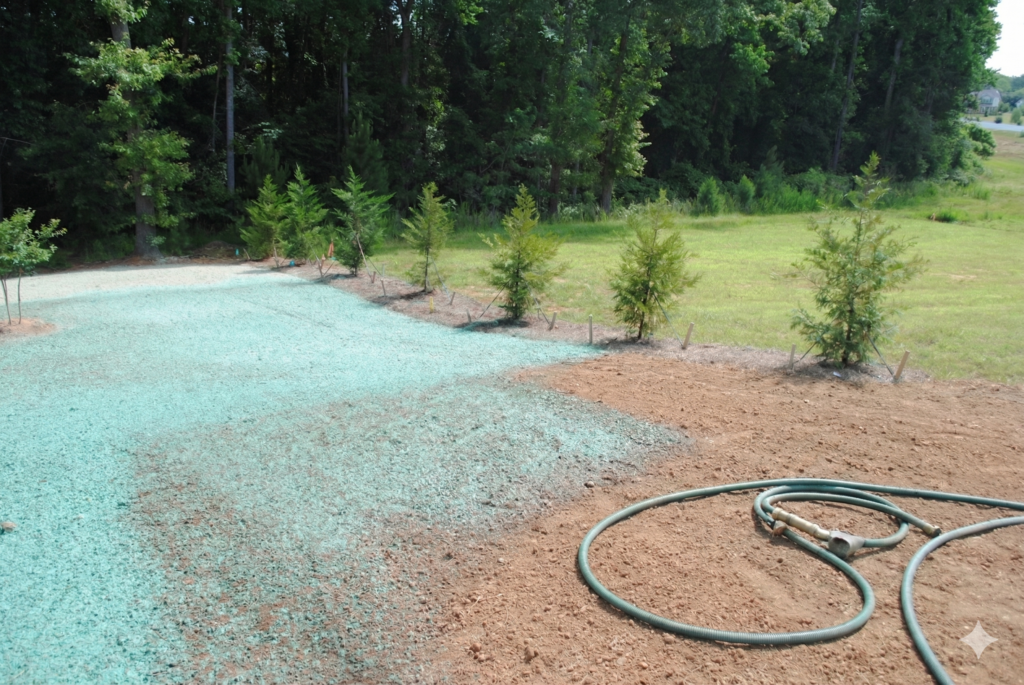
Hydroseeding is a seeding method that uses a spray-applied slurry — a mixture of seed, water, mulch, and tackifier — to establish grass and ground cover over bare or recently disturbed soil. Instead of broadcasting dry seed and hoping it stays put, the slurry is pumped through a hose and sprayed directly onto the ground surface, where the tackifier binds the mixture in place and the mulch helps retain moisture around the seed.
The result is more consistent germination across the treated area, even on sloped or uneven ground where dry seeding tends to fail. The seed doesn’t shift with rain, doesn’t dry out before it can sprout, and doesn’t end up concentrated in low spots. On grades and slopes — which are common on East Tennessee properties — that difference matters a lot.
At Apex Landworks, we run a 200-gallon tank setup. We arrive with the slurry already mixed and ready to apply, and the application is typically completed in a single visit. It’s a practical, efficient solution for anyone who needs ground cover established quickly after land work has been done.
Who Is This Service For
Hydroseeding fits a wide range of situations, and it’s most useful any time ground has been disturbed and needs to be stabilized before erosion sets in.
Residential Homebuilders & Contractors
Use hydroseeding to stabilize soil across a newly finished lot before landscaping goes in. After grading and site work, the ground is often left exposed and vulnerable. Hydroseeding gives builders a fast way to cover that ground and meet erosion control expectations before a property changes hands.
Commercial Developers
With graded or newly developed sites benefit from the uniform coverage hydroseeding provides. Large bare areas that would take a long time to cover with conventional seeding can be treated quickly in a single application pass.
Landowners dealing with erosion on slopes, banks, or bare patches
Can use hydroseeding to get vegetation established before the problem gets worse. If you have a bank that's been washing out, a road cut that's sliding, or a low-cover area that keeps losing topsoil, establishing ground cover quickly is the most practical fix.
Property owners who have recently had forestry mulching or land clearing done
Often need to follow up that work with seeding. After the overgrowth is gone, the ground underneath may be thin on existing vegetation. Hydroseeding is a natural follow-on service that closes out a clearing project the right way.
How We Apply It
Truck-Mounted Tank & Slurry Preparation
We keep the process simple and efficient. Our 200-gallon tank arrives at the job site loaded with the hydroseeding slurry — seed, water, mulch, and tackifier mixed together and ready to apply. There’s no on-site mixing delay, and we’re set up to get to work quickly.
Pump & Spray Application
The pump drives the mixture through the application hose, and the operator sprays it directly onto the target area. The tackifier in the mix does an important job here: it helps the seed and mulch adhere to the soil surface so that the first rain after application doesn’t undo the work. On slopes, that adhesion is the difference between a successful seeding and watching the seed run off.
Even Coverage, Efficient Results
Coverage is applied evenly across the treatment area, including spots that would be hard to reach with conventional seeding equipment. We work through the area methodically and, in most cases, finish the job in a single visit.
Fast-Starting Germination
After application, the slurry will dry on the surface and the germination process begins. Moisture, temperature, and seed mix all factor into how quickly you’ll see results, but the fundamentals — seed-to-soil contact, moisture retention, and protection from washout — are in place from the moment we finish spraying.
Why Hydroseeding Works Better on East Tennessee Properties
Hydroseeding is a seeding method that uses a spray-applied slurry — a mixture of seed, water, mulch, and tackifier — to establish grass and ground cover over bare or recently disturbed soil. Instead of broadcasting dry seed and hoping it stays put, the slurry is pumped through a hose and sprayed directly onto the ground surface, where the tackifier binds the mixture in place and the mulch helps retain moisture around the seed.
The result is more consistent germination across the treated area, even on sloped or uneven ground where dry seeding tends to fail. The seed doesn’t shift with rain, doesn’t dry out before it can sprout, and doesn’t end up concentrated in low spots. On grades and slopes — which are common on East Tennessee properties — that difference matters a lot.
At Apex Landworks, we run a 200-gallon tank setup. We arrive with the slurry already mixed and ready to apply, and the application is typically completed in a single visit. It’s a practical, efficient solution for anyone who needs ground cover established quickly after land work has been done.
Pair This Service With
Hydroseeding is often most effective when combined with land work that’s already been completed or is planned as part of a larger project. Two services we offer that pair naturally with hydroseeding are:
Forestry Mulching — If you’ve recently had overgrowth, brush, or dense vegetation cleared from your property, the ground underneath is likely bare and exposed. Forestry mulching leaves a thin layer of shredded organic material on the surface, which can actually support seed germination. Following a mulching job with hydroseeding is a practical way to complete the land preparation process and protect your cleared ground going forward. [Learn more about our forestry mulching service.]
Gravel Driveway Repair and Regrading — Driveway repair and regrading work involves moving material, reshaping drainage lines, and sometimes cutting into slopes adjacent to a driveway. Those disturbed areas alongside or below a repaired driveway can be left bare after the grading work is finished. Hydroseeding those areas after the driveway work is done helps stabilize the surrounding ground and prevents the kind of washout that sends soil and debris back onto a newly repaired road surface.
Service Area
Apex Landworks operates out of Greeneville, TN, providing services across East Tennessee and into Western North Carolina, including the areas listed below and the and surrounding areas in between:
- Greeneville
- Knoxville
- Morristown
- Johnson City
- Jonesborough
- Maryville
- Kingsport
- Newport
- Asheville
Frequently Asked Questions
How is hydro-seeding different from just throwing down seed?
The slurry mixture used in hydro-seeding keeps the seed in contact with the soil, retains moisture during early germination, and provides a thin layer of mulch protection. On open or sloped ground, dry seed often washes away or dries out before it can establish. Hydro-seeding significantly improves germination rates in those conditions.
When is the best time of year to hydro-seed?
It depends on the seed mix and your goals, but spring and fall are typically the most favorable windows in this region. That said, timing sometimes has to follow construction schedules rather than ideal conditions. We’ll give you an honest read on what to expect based on when you’re ready to seed.
Does the ground need to be prepared before you come out?
Ideally, yes. Hydro-seeding works best on a surface that’s been graded and has the major debris removed. If you’ve recently had forestry mulching or grading done, that often puts the ground in good shape for seeding. We can take a look and let you know if anything needs to be done before we apply.
How much area can you cover in one visit?
We run a 200-gallon tank, so the coverage per visit depends on the application rate needed for the area and slope conditions. We’ll give you a clear picture of what one visit covers when we’re putting together the estimate.
Can you hydro-seed on a slope?
Yes, and it’s actually one of the situations where hydro-seeding has a clear advantage over conventional seeding. The tackifier in the mix helps hold everything in place on grades where dry seed would wash or blow away before germinating.
Do you offer free estimates for hydro-seeding jobs?
Yes. We’ll come out, look at the area, and give you a clear estimate before any work begins.